 Skip to content
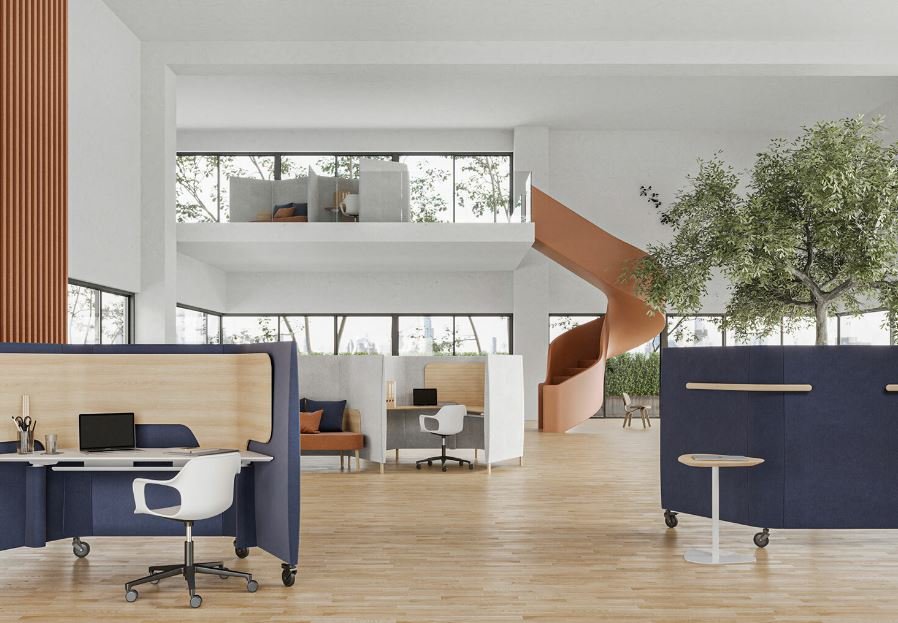
A well-planned office can influence how comfortably people work, communicate, and organize their daily tasks. In the Philippines, businesses are increasingly paying attention to workspace planning as they build offices for growing teams, hybrid work arrangements, and client-facing operations. Office Workstations Philippines solutions can provide an organized way to accommodate employees while making effective use of available floor space. From startups in Manila to established companies in Quezon City, the right workstation layout can support productivity, privacy, collaboration, and long-term workplace flexibility.
What Are Office Workstations?
Office workstations are designated employee work areas that typically combine a desk, work surface, storage, partitions, and accessories into one organized setup. Unlike individual desks placed randomly around a room, workstation systems are designed around the way employees use space.
Depending on the office, workstations may include benching systems, cubicle workstations, L-shaped configurations, cluster desks, partitioned stations, or modular systems. The appropriate choice depends on employee roles, available floor area, privacy requirements, communication patterns, and the company’s future expansion plans.
For organizations planning an office in Manila or Quezon City, workstation selection should therefore be considered as part of the overall office layout rather than simply as a furniture purchase.
Why Office Workstations Matter for Philippine Businesses
Office space can represent a significant investment for a business. Poorly arranged furniture may leave valuable floor area unused, create uncomfortable walkways, or make departments difficult to organize. A properly planned workstation system can help businesses use their available space more efficiently.
Workstations can also establish clear individual work zones. Employees can have dedicated areas for computers, documents, stationery, and other essential equipment. Depending on the design, partitions can provide a degree of visual separation without completely isolating employees from their teams.
This balance can be particularly useful for modern offices where employees need both concentration and communication throughout the working day.
Choosing the Right Workstation Layout
There is no single workstation arrangement that works for every organization. A company should first consider how many employees will use the office and how they interact with one another.
Open workstation layouts are often suitable for teams that communicate frequently. Clustered workstations can group employees according to departments or projects. Partitioned stations may provide additional visual privacy for employees who regularly handle confidential documents or require focused work.
L-shaped workstations can provide additional surface area for employees who work with multiple monitors, paperwork, or equipment. Bench-style systems can be useful when businesses want a clean, collaborative environment with efficient use of floor space.
The best layout should reflect actual working patterns rather than following a trend simply because it looks attractive.
Office Workstations for Small and Growing Businesses
Startups and small businesses often need furniture that can adapt as their teams expand. Buying a Office Workstations Philippines system that cannot accommodate future changes may result in unnecessary replacement costs.
Modular office workstations can be considered when flexibility is important. Depending on the system, businesses may be able to reconfigure employee positions, add workstations, adjust partitions, or reorganize departments as the company develops.
For a growing business in Manila or Quezon City, it is useful to consider not only the current employee count but also the expected workforce over the next few years.
Office Workstations for Corporate Offices
Large organizations often have different departments with different workspace requirements. Finance teams, human resources departments, customer service staff, sales teams, and administrative employees may all use their workspaces differently.
A carefully planned workstation system can help establish departmental zones while maintaining a consistent office appearance. Storage requirements, cable management, desk dimensions, privacy levels, and access to shared areas should all be considered during planning.
For larger projects, procurement teams can benefit from requesting detailed furniture specifications before making a purchasing decision. This makes it easier to compare workstation configurations based on materials, dimensions, functionality, durability, and installation requirements.
Important Features to Consider
When comparing office workstations, businesses should look beyond appearance. Several practical features can affect everyday usability.
Desk dimensions should provide enough space for monitors, keyboards, documents, and other frequently used equipment. Employees who use multiple screens may require larger work surfaces.
Cable management is another important consideration. Dedicated cable channels or management systems can reduce visible wiring and help keep work areas organized.
Storage can include pedestals, overhead cabinets, shelves, or shared storage units. The appropriate solution depends on how much physical documentation employees need to keep nearby.
Partitions can provide visual separation and help define individual work areas. Different partition heights can produce different levels of privacy and openness.
Materials and construction should be assessed according to expected daily use. Commercial office furniture needs to withstand regular movement, cleaning, equipment placement, and long working hours.
Office Workstations and Space Planning
Before ordering furniture, businesses should measure the available office area carefully. The floor plan should account for desks, chairs, storage units, meeting spaces, reception areas, walkways, doors, windows, electrical points, and emergency access.
A workstation that fits physically may still be unsuitable if it creates cramped circulation or prevents employees from moving comfortably around the office.
Space planning is especially important in compact commercial offices where every square meter matters. A professional furniture supplier can help businesses evaluate different configurations before installation.
Office Workstations Philippines for Hybrid Workplaces
Hybrid working has changed how some businesses approach office design. Instead of assigning permanent desks to every employee, companies may create flexible work areas that support employees on different schedules.
Depending on company policy, workstation areas can be designed around shared desks, team neighborhoods, touchdown spaces, and reservable workstations.
However, businesses should consider employee privacy, equipment security, storage, and technology requirements before adopting a flexible workstation model. The furniture arrangement should support the company’s actual working system rather than forcing employees into an unsuitable layout.
How to Compare Office Workstation Suppliers
Price is important, but it should not be the only factor when comparing suppliers. Businesses should evaluate the complete value of the furniture solution.
Consider asking suppliers about:
- Workstation dimensions and configurations
- Available materials and finishes
- Partition options
- Cable management
- Storage compatibility
- Installation services
- Warranty coverage
- Replacement parts
- Customization options
- Delivery arrangements
- Project lead times
- After-sales support
Businesses purchasing furniture for multiple departments should also request a detailed quotation that clearly separates furniture, accessories, delivery, and installation where applicable.
Common Mistakes When Buying Workstations
One common mistake is purchasing furniture before creating a proper floor plan. This can result in workstations that technically fit but leave insufficient circulation space.
Another mistake is choosing furniture based solely on appearance. A visually attractive workstation may not provide sufficient storage, cable management, desk space, or privacy for everyday operations.
Businesses should also avoid ignoring future growth. If additional employees are expected, the initial workstation plan should ideally allow reasonable flexibility.
Failing to consider employee comfort is another issue. Desk dimensions, chair compatibility, monitor positioning, lighting, and overall workspace organization can influence the usability of the office.
Office Workstations in Manila and Quezon City
Businesses searching for office furniture in Manila and Quezon City have different workspace environments to consider, ranging from compact offices and coworking-style spaces to large corporate facilities.
Local businesses can benefit from working with suppliers that understand commercial office requirements and can discuss measurements, configurations, delivery, and installation. For companies handling larger projects, an initial consultation can help identify practical workstation arrangements before furniture is finalized.
Whether the requirement involves a small startup office, a corporate headquarters, school administration area, healthcare facility, or government workspace, the workstation solution should be selected according to the users, space, workflow, and operational requirements.
Why Professional Planning Can Make a Difference
Office furniture is a long-term investment. A workstation system affects how employees interact with their desks, storage, equipment, colleagues, and surrounding spaces every day.
Professional planning can help identify potential layout problems before installation begins. It can also help businesses compare different workstation configurations based on employee numbers, available floor space, storage needs, privacy requirements, and expansion plans.
For organizations looking for Office Workstations Philippines, discussing their requirements with an experienced office furniture provider can make the purchasing process more structured and practical.
Finding Office Workstations for Your Business
The right workstation should support the way your organization actually operates. Businesses should consider employee requirements, floor space, layout, durability, storage, technology, privacy, and future expansion before selecting a system.
If you are planning a new office or upgrading an existing workplace, Cebu Office Furniture Den can be considered when exploring office furniture solutions and workstation configurations. A consultation can help businesses clarify their requirements, compare suitable options, and plan furniture around their available workspace.
Frequently Asked Questions
What are office workstations used for?
Office workstations provide organized individual or shared work areas for employees while helping businesses manage floor space efficiently.
Which workstation layout is suitable for a small office?
Compact benching, clustered, or modular workstation configurations can be considered depending on employee numbers, available space, privacy requirements, and workflow.
Can office workstations be customized?
Many workstation systems can be configured with different desk arrangements, partitions, storage solutions, finishes, and accessories depending on the supplier and product range.
What should I check before buying office workstations?
Check dimensions, materials, construction quality, cable management, storage, privacy, installation requirements, warranty, and compatibility with your office layout.
Are workstations suitable for corporate offices?
Yes. Workstation systems can be arranged for departments, teams, and different employee roles, making them suitable for many corporate environments.
How can I choose workstations for an office in Manila or Quezon City?
Start with your floor plan, employee count, workflow, storage requirements, privacy needs, and future expansion plans. Then compare workstation configurations and supplier services based on those requirements.
Building a More Functional Philippine Workplace
Office furniture should do more than fill an empty room. It should support employees, accommodate technology, organize departments, and make practical use of the available space. A thoughtfully selected workstation system can help create a workplace that is easier to manage and adapt as business requirements change.
For companies researching Office Workstations Philippines, the most useful starting point is a clear understanding of their space and operational needs. From there, businesses can compare workstation layouts, materials, storage options, installation services, and customization possibilities before requesting a quotation.
For Manila and Quezon City businesses, planning the workstation system before purchasing can help create a more organized workplace while keeping the furniture investment aligned with long-term business requirements.

